
Get a Quote for Storm Damage Restoration: 2026 Guide

Table of Contents
Last Updated: September 25, 2026
What You Need Before Requesting a Storm Damage Restoration Quote
Getting a storm damage restoration quote starts with three things: a documented damage assessment, your insurance policy details, and a clear timeline.
Most homeowners call a contractor before their insurer, then discover the estimate doesn't match their policy. The order matters.
Before you request any quote, collect:
Photos and video of all damage, taken before anything is moved or repaired
Your insurance policy number and a copy of your declarations page
A written timeline of when the storm hit and when you noticed the damage
Records of any emergency repairs already made, with receipts
Storm damage restoration is the process of repairing a property after wind, hail, water, or debris damage, from emergency stabilization through final reconstruction. It differs from routine repair because it usually involves an insurance claim, a documented scope of work, and coordination between you, your contractor, and an adjuster.
Pro Tip Take your photos at eye level and from a distance. Close-ups alone rarely show an adjuster the full scope of damage. A wide shot plus a close-up of the same area tells the whole story.
The Storm Damage Restoration Process Steps: From Assessment to Final Walkthrough
A standard storm damage restoration process runs through six stages: hazard assessment, emergency tarping and board-up, water mitigation, structural drying, reconstruction, and a final walkthrough. Document each stage in writing.

Here's how the stages typically break down:
Stage | What Happens | Typical Duration |
Hazard assessment | Safety check, damage documentation | Same day |
Emergency tarping | Roof and window protection | Same day to 48 hours |
Water mitigation | Extraction and moisture detection | 1-3 days |
Structural drying | Air movers, dehumidifiers, monitoring | 3-5 days |
Reconstruction | Framing, roofing, drywall, finishes | Weeks, varies by scope |
Final walkthrough | Inspection and sign-off | 1 day |
Average Cost of Storm Damage Repair and What Drives Your Quote
There is no single average cost of storm damage repair: pricing depends on scope, materials, roof pitch, accessibility, and whether the work is a full replacement or targeted fix. Any contractor quoting a firm number over the phone without an inspection is guessing.
What actually drives the number on your quote:
Extent of damage. A few missing shingles costs far less than a compromised roof deck.
Materials. Asphalt, metal, and tile carry different price points, and availability after a regional storm can spike lead times and cost.
Access and height. Steep roofs, tight lots, and fenced homes take longer and require more safety equipment.
Hidden damage. Water behind walls or under flooring often isn't visible until demolition, which is why a good quote carries a contingency line.
Permits and code upgrades. Local requirements can add line items, especially on older homes.
Emergency vs. scheduled work. After-hours tarping and board-up carry labor premiums.
Watch Out Be wary of any contractor who offers a price before inspecting the property. A quote without an inspection is a sales tactic, not an estimate, and it usually grows once work begins.
How to Read a Storm Damage Restoration Quote Line by Line
A quote is only useful if you can compare it against the adjuster's scope. Here's the anatomy of a well-built quote:
Line item | What it should specify | Red flag if missing |
Labor | Hours or units, trade classification, and rate basis | A single lump-sum labor number with no breakdown |
Materials | Brand, grade, and quantity (e.g., squares of shingles, sheets of drywall) | "Materials" as one line with no spec |
Equipment | Type and rental duration (air movers, dehumidifiers, generators) | Equipment bundled into labor with no count |
Disposal | Dumpster size, haul count, and disposal fees | No disposal line at all |
Permits | Who pulls them and the estimated fee | "Permits extra" with no estimate |
Contingency | Percentage or dollar allowance for hidden damage | No contingency, or a contingency that's already been spent |
Overhead and profit | Stated percentage | O&P hidden inside unit prices |
Matching the Quote to the Adjuster's Scope
The adjuster's scope of loss and your contractor's estimate use different formats but describe the same work. Sort both by trade, roofing, siding, drywall, flooring, HVAC, electrical, and compare. Where the contractor's scope is larger, that's your supplement request. Where the adjuster's is larger, ask your contractor why before you sign.
Questions to Ask Before You Accept Any Quote
Is this quote based on an on-site inspection, or a drive-by?
Does the price include tear-off, disposal, and permits?
What's the contingency, and how is it triggered?
Will you submit supplements directly to my adjuster?
What's the payment schedule, and how much is due at signing?
What's the written change-order process if hidden damage is found?
Southern Elite documents the full scope before work starts, so you can compare the quote against your adjuster's report line by line.
How to File an Insurance Claim for Storm Damage Without Delays
Filing an insurance claim for storm damage moves fastest when you report the loss early, submit documentation in one organized packet, and stay reachable for the adjuster's inspection. Delays usually come from missing paperwork, not the insurer.
Steps that keep a claim on track:
Report the loss to your insurer as soon as it's safe to do so. Ask for the claim number in the same call.
Submit your photos, receipts, and a written damage summary together, not in dribs and drabs.
Schedule the adjuster's inspection and be present if you can. Walk the adjuster through the damage in the same order you documented it.
Get the adjuster's written scope of loss before signing anything.
Compare the adjuster's scope against your contractor's estimate, line by line.
Request a supplemental review if the two don't match.
Key Takeaway The adjuster's first estimate is rarely the final number. A documented supplement, backed by photos and a contractor's scope, is a normal part of the process, not a confrontation.
What to Do If Your Storm Damage Claim Is Denied or Underpaid
Most guides stop at "file the claim." The harder problem is when the check doesn't cover the scope your contractor documented. A denial or lowball offer isn't the end, there are three paths forward.
Path 1: Request a re-inspection with new evidence.
The original claim number and the denial letter
Your contractor's itemized scope of work
Photos and video that contradict the denial reason
A written statement of what you're asking the insurer to reconsider
Any receipts for emergency mitigation you already paid for
Path 3: Escalate to your state's department of insurance.
When to bring in a public adjuster.
What not to do.
Watch Out Deadlines on appeals and complaints are real. Missing the window can close the path entirely. Put the deadline on your calendar the day you receive the denial letter.
Keeping the Claim Moving After a Denial
The biggest mistake after a denial is going quiet, silence reads as acceptance. A short, documented, evidence-backed response, in writing and dated, keeps the claim alive and forces the insurer to respond on the record. Contractors regularly see denials reversed at re-inspection simply because the homeowner submitted better photos and a line-item scope the second time.
DIY vs. Professional Thresholds: When a Quote Is Worth It
A quote is worth it the moment damage touches structure, water, or your insurance claim. Small cosmetic fixes are reasonable DIY territory. Anything involving roofing, moisture, or a claim is not.
Use this threshold test:
DIY territory: Missing fence boards, a cracked window pane, minor siding dents, debris removal from a yard.
Call a professional: Any roof penetration, water intrusion, ceiling stains, sagging drywall, or damage you plan to claim on insurance.
Always professional: Structural concerns, electrical or gas components, and anything requiring a permit.
Contractor Vetting Checklist for Storm Damage Restoration
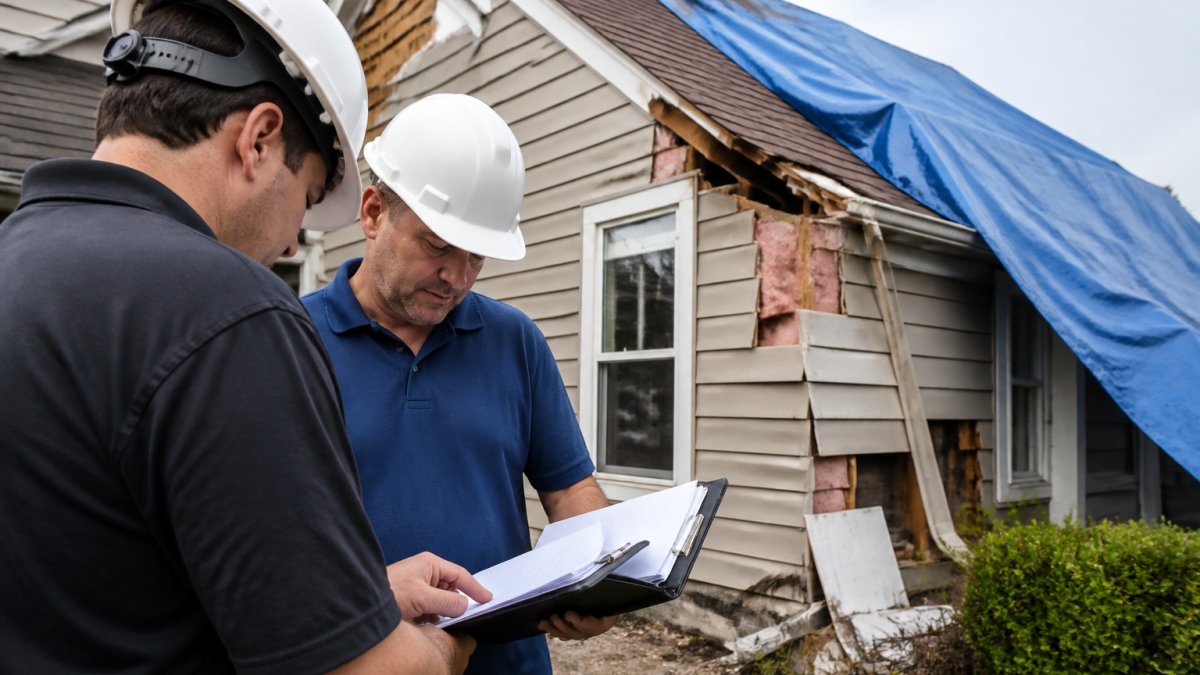
Vetting a contractor before you sign protects your claim and your property. After large storms, out-of-state crews often appear, collect deposits, and disappear. This checklist filters most of them out.
Verify the contractor's license and registration in your state
Confirm general liability and workers' compensation insurance
Ask for local references from the past 12 months
Get the scope of work in writing, with materials specified
Confirm who handles permits and inspections
Ask how supplements and change orders are priced
Never pay the full amount upfront
Confirm the contractor will communicate directly with your adjuster
Conclusion
Storm damage rarely waits for a convenient moment, and the paperwork can feel as overwhelming as the damage. Getting a clear quote early, from a contractor who documents the scope and works directly with your adjuster, keeps the process moving.
Frequently Asked Questions
How much does it cost to repair tornado damage?
Costs vary widely based on damage severity, home size, and materials. Pricing depends on the scope of work, materials, and other factors. Most homeowners pay a deductible and their insurance covers the rest. Requesting a free estimate from a licensed contractor gives you a clear picture before committing.
What information do contractors need to provide a storm damage quote?
Contractors typically need your address, a description of the damage, photos or videos, your insurance claim number if filed, and any adjuster reports. Having your policy details and deductible amount ready speeds up the process. A thorough inspection will identify hidden issues like water mitigation needs or structural damage.
How long after a storm can I file an insurance claim for damage?
Most policies require you to file within one year of the storm date, but some states have shorter deadlines. Contact your insurer as soon as you notice damage. Delays can lead to claim denial. Document everything with photos and notes, then schedule a professional roofing inspection to support your claim.
Should I get multiple quotes for storm damage repairs?
Yes. Getting at least two or three quotes helps you compare pricing and scope. Be wary of contractors who pressure you for immediate decisions or demand large upfront payments. A reputable company provides a written estimate, explains the restoration process, and never asks for full payment before work begins.


Comments