
How to Manage Insurance Repair Claims

Table of Contents
Last Updated: September 20, 2026
Understanding the Insurance Repair Claims Process
To manage insurance repair claims effectively, you need to follow a logical sequence. Knowing what to expect at each stage gives you control over the outcome.
When property damage occurs, your insurance company assesses the loss and determines coverage. You must document everything and provide accurate information. This mutual obligation is the foundation for managing insurance repair claims effectively.
The basic flow: report damage, document it, file your claim, work with an adjuster, get estimates, and move toward settlement. Skipping a step invites delays or disputes.
According to the National Association of Insurance Commissioners, understanding your policy terms upfront prevents confusion when you need to file a claim. Most homeowners don't review their coverage limits until after damage occurs. By then, it's too late to change what's covered.
Documenting Property Damage for Insurance Claims
Documentation is your most powerful tool when you manage insurance repair claims. Without clear evidence of what happened and what was damaged, the insurance company has no reason to approve your claim.
Document immediately after the incident, before anything is moved or cleaned up. Your photos and notes create a complete record that protects you when the adjuster inspects.
What to photograph and record
Take photos and video from multiple angles: wide shots of overall damage, then close-ups of specific areas, damaged items, and structural damage.
Show context: photograph damaged areas in relation to the rest of the room and include reference objects for scale.
Record the date, time, and cause of damage for each photo. Document weather conditions or accident details. Keep notes with your photos.

Create a narrated video walkthrough of damaged areas. This creates a time-stamped record that's difficult to dispute.
Save everything to multiple locations: email copies and upload to cloud storage to prevent loss.
Creating a damage inventory
List every damaged item with detail. Instead of "furniture damaged," write "brown leather sofa, approximately 8 years old, purchased from West Elm, visible tears and water stains on cushions and frame."
For each item, note: what it is, approximate age, purchase location, pre-damage condition, and estimated replacement cost.
This inventory is crucial when negotiating settlement. Showing items were relatively new or well-maintained strengthens your position against depreciation.
Include receipts, proof of purchase, or credit card statements. More documentation makes it harder for the insurance company to dispute your claim value.
Filing Your Claim and Working With the Insurance Adjuster
File your claim as soon as possible. Most policies require notification within a specific timeframe, and delays give the insurance company grounds to deny it.
File online, through a mobile app, or by phone. Have your policy number ready and provide a clear, factual description of what happened. Avoid speculation or exaggeration.
Submitting your claim
When you submit your claim, you provide your initial proof of loss, a formal statement claiming coverage for specific damages. The insurance company assigns a claim number and adjuster.
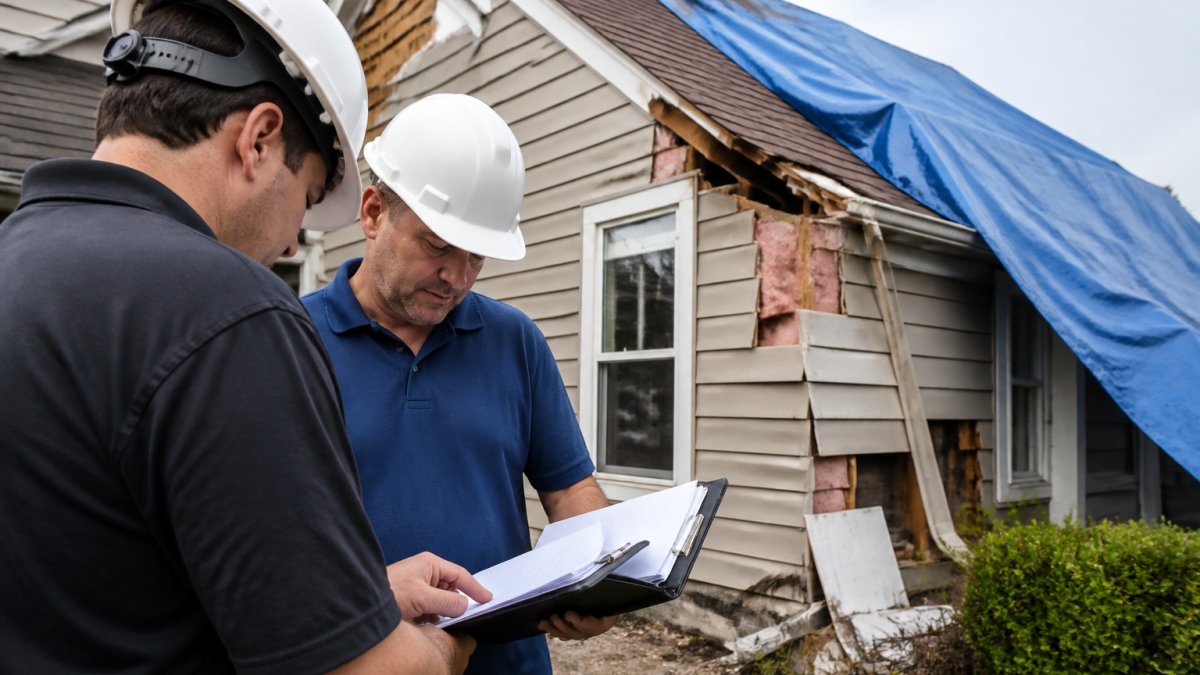
Your adjuster investigates your claim and determines what the insurance company will pay. They'll contact you to schedule an inspection, visit your property, take photos, and assess damage.
Be present during the inspection. Show the adjuster everything damaged, including areas that aren't immediately obvious. Have repair estimates available.
The adjuster determines what the insurance company owes based on your policy terms, not to maximize your payout. Be thorough and clear about the damage.
What to expect during the inspection
The adjuster will examine the damage, take measurements, and ask questions about how it occurred, when you noticed it, and what steps you've taken.
Answer questions honestly. If unsure, say so and offer to follow up with documentation rather than speculating.
The adjuster prepares a damage assessment and estimate that becomes the basis for settlement. If you disagree, get your own estimate and submit it, or request an appraisal if your policy includes that option.
Insurance Claim Repair Timeline: What to Expect
The timeline from claim submission to final settlement typically takes 30 to 90 days, depending on damage complexity and how quickly you provide documentation.
Week 1: Report damage and file claim; adjuster assigned and inspection scheduled. Week 2-3: Adjuster inspects and prepares assessment. Week 3-4: Receive insurance estimate; get your own estimates. Week 4-8: Negotiate discrepancies and submit additional documentation. Week 8-12: Settlement check issued once estimates agreed.
From claim submission to settlement
Don't assume the adjuster's estimate is final. If your repair estimates are higher, submit them. Many adjusters will revise their estimate when presented with credible competing bids.
Keep communication in writing. Email updates to your adjuster and follow up phone conversations with email summaries. This creates a paper trail that protects you.
Handling supplemental claims and scope changes
During repairs, contractors often discover additional damage not visible during initial inspection, water damage behind walls, structural damage under flooring, or fire damage in attics.
File a supplemental claim, a formal request for additional coverage. Your contractor documents the new damage with photos and provides an estimate.
Submit the supplemental claim with supporting documentation. The adjuster reviews it and determines coverage. Supplemental claims are common and expected.
The key is documenting the new damage clearly and showing that it's directly related to the original incident. If the new damage is unrelated, the insurance company will likely deny it.
Hiring a General Contractor for Insurance Repairs
You need a qualified contractor to perform repairs. Many people choose based solely on price, then regret it when quality suffers.
A good contractor understands insurance claims, knows how to work with adjusters, documents additional damage, and manages scope and costs.
Vetting contractors and verifying credentials
Ask for references from contractors who have completed insurance repair work. Call those references and ask specific questions: Did the contractor communicate regularly? Were there surprise costs? Was the work completed on schedule?
Verify that the contractor is licensed and insured. Check with your state's licensing board. Confirm that their license is current and in good standing. Ask for proof of general liability insurance and workers' compensation insurance.
Get multiple bids. Three to five estimates from different contractors gives you a realistic range. Don't automatically choose the lowest bid. The lowest price often means corners will be cut.
Review the scope of work in each estimate carefully. Do all estimates include the same items? If one estimate is significantly lower, ask why. What are they not including that other contractors included?
Getting repair estimates and negotiating costs
Your contractor should provide a detailed written estimate that breaks down costs by category. Labor, materials, permits, and any other expenses should be itemized. This level of detail helps when negotiating with your insurance company.
If your contractor's estimate is higher than the insurance company's estimate, that's normal. Insurance company estimates are often conservative. Your contractor's estimate reflects actual market conditions and their specific approach to the work.
Submit your contractor's estimate to the insurance company. If there's a significant difference, ask the insurance company to explain what they excluded or underestimated. Sometimes they'll revise their estimate.
OEM vs. aftermarket parts decisions
When repairs involve replacing parts, you'll face a choice between original equipment manufacturer (OEM) parts and aftermarket alternatives. OEM parts are made by the original manufacturer. Aftermarket parts are made by third parties.
Managing Repair Costs and Deductibles
Your deductible is the amount you pay out of pocket before insurance coverage kicks in. If your deductible is $1,000 and repairs cost $5,000, you pay $1,000 and your insurance company pays $4,000.
Understanding your deductible and out-of-pocket expenses
Your deductible applies per claim, not per incident. If a single event causes multiple types of damage, you typically pay the deductible once. If you file multiple claims in the same year, you pay the deductible for each claim.
Subrogation and deductible recovery options
Subrogation is the insurance company's right to recover money from a third party who caused the damage. If a neighbor's negligence caused water damage to your home, your insurance company can pursue that neighbor for reimbursement.
Common Mistakes to Avoid When Managing Insurance Claims
The biggest mistake is not documenting damage thoroughly. Take photos and video immediately. Don't wait. Don't assume the adjuster will see what you see.
Frequently Asked Questions
What should I do immediately after property damage occurs?
First, ensure everyone's safety and call emergency services if needed. Then contact your insurance company to report the damage. Take photos and videos of all affected areas before making temporary repairs. Document everything with timestamps and descriptions. Avoid throwing away damaged items until the adjuster has inspected them. Keep receipts for any emergency repairs or temporary fixes you make to prevent further damage, these are often covered by insurance.
How long does the insurance claim repair timeline typically take?
Most claims are processed within 30-45 days, though timelines vary based on damage complexity and claim volume. Initial inspection usually occurs within 5-10 business days of filing. After the adjuster's assessment, you'll receive a settlement offer. Repairs can then begin, typically taking 2-8 weeks depending on damage severity. Supplemental claims for additional discovered damage may extend the timeline by 2-4 weeks. Communication with your contractor and adjuster helps keep the process moving.
What's the biggest mistake people make when managing insurance repair claims?
The most common mistake is starting repairs before the adjuster inspects the damage or without proper documentation. This can result in claim denial or reduced settlement. Another critical error is hiring contractors without verifying they're licensed, insured, and experienced with insurance claims. People also fail to get multiple repair estimates, which weakens their negotiating position. Finally, many don't understand their policy terms, leading to disputes over coverage limits and deductibles.
Can I negotiate the repair estimate provided by my insurance adjuster?
Yes. If you believe the estimate is too low, you can request an independent appraisal or obtain competing estimates from licensed contractors. Present these estimates to your insurance company with detailed documentation of why additional work is needed. Many adjusters will reconsider if you provide evidence of overlooked damage or market-rate pricing. Hiring a general contractor experienced with insurance claims can strengthen your position, they can identify scope issues and justify higher estimates with professional assessments.


Comments